ABOUT COMMUNION (EUCHARIST)
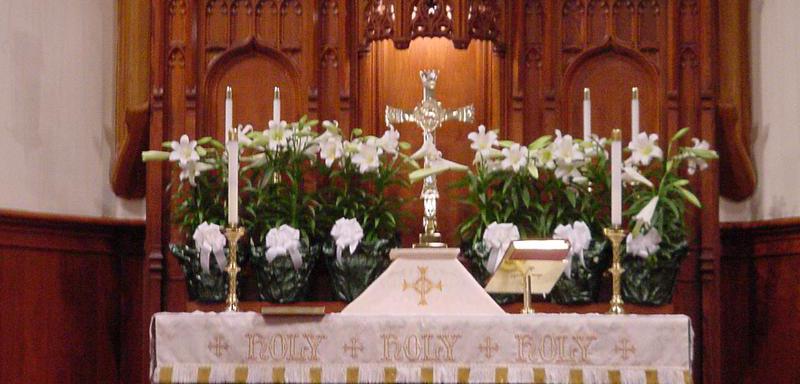
In the Episcopal church, we have communion at almost every service held in the church building. You will be invited to the altar, and may receive “in both kinds” – that is receive the bread and wine – or by receiving only the bread. Celebrating communion is one way we express our relationship with God, our acceptance of Christ as our Savior and our common bond with each other.
During this time, the priest will distribute the host (bread). The wine can be taken drinking from the communion cup, or by intinction. For intinction, give the host to the chalice bearer who will dip the host into the wine and give it back to you to consume. Medical experts agree that the danger of transmitting communicable diseases by sharing the chalice (cup) is negligible. All Episcopal churches use real wine; many, including St. James, use port. The higher alcoholic content, along with the use of the silver chalice, and careful wiping of both inside and outside surface of the chalice and turning the chalice to present a "fresh surface" greatly reduces any risks.
If you feel uncomfortable about a common cup, don’t worry. Episcopalians believe Christ is equally present in both the consecrated bread and in the wine; “receiving one, the other, or both, get you no more (or less) in Christ’s presence.” So you can receive the bread only, if you prefer.
You may receive a blessing, rather than taking Communion. Simply cross your hands over your chest when you are at the altar rail to indicate this.
The wine and host can also be brought to you at the pew if you have mobility problems. Just let an usher know of your need.
To learn more about our hybrid services, and joining for in-peson worship, click here...
Eucharist “to go” (distributing bread without a community Eucharist) and “Virtual Communion” (such as a minister “blessing” bread and wine through a phone or internet connection) are prohibited by the Episcopal Diocese of Central New York.